On this page
Study the ordinary day alongside the event
A stadium can occupy a large part of a neighbourhood even when no event is taking place.
Look at how people move around its perimeter and which streets it connects. The design brief should include those ordinary journeys as well as the concentrated arrival and departure of a crowd.
Make entrances and routes legible
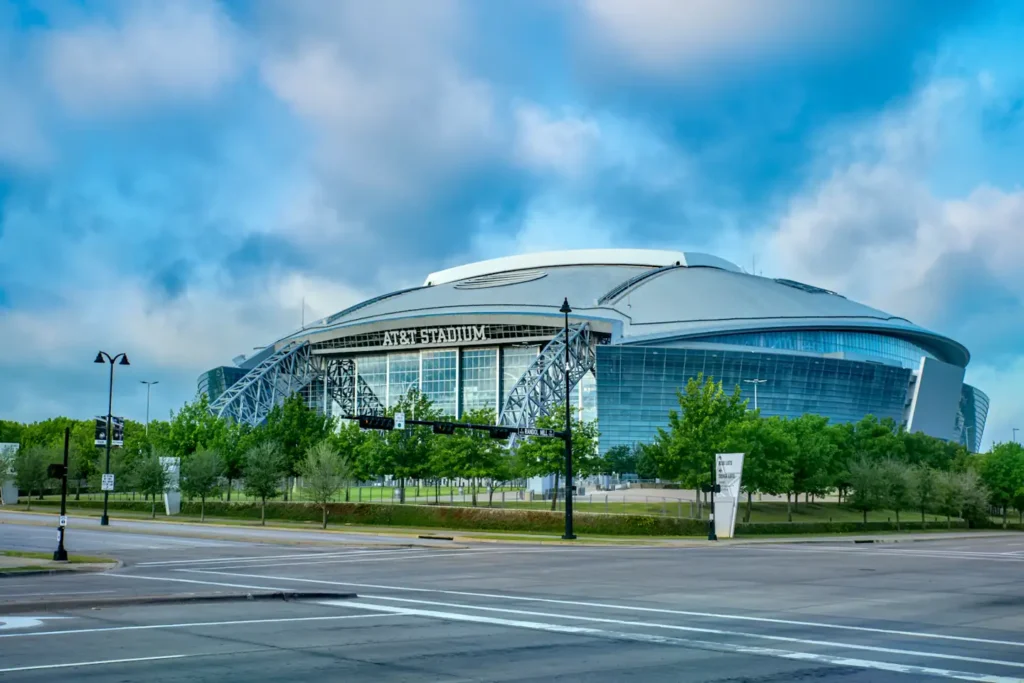
A visitor needs to understand where to go before reaching a busy decision point. Information, circulation and relevant operational planning have to work together.
Consider different access needs and modes of arrival. The scale of a stadium makes clarity important; an impressive facade should still offer an understandable route to the part a visitor needs.
Give the edge a useful role
An active frontage, a public route or an appropriately managed shared space can connect a large venue with its surroundings. The right arrangement depends on the site and the operation.
Begin with local needs instead of assuming that every edge should be filled with the same programme. The space needs a purpose that can be supported beyond the opening photograph.
Review what changes over time
Transport patterns, surrounding development and the use of public space can change. Keep the relationship with local users part of the venue’s continuing review.
A stadium can be assessed through the quality of its ordinary edges as well as the atmosphere of a full stand. Both belong to the experience of the place.