On this page
Start before the first sign
The journey through an airport begins with expectations formed before arrival. A traveller needs to understand which terminal, entrance and transport connection applies to the trip.
Keep that language consistent with the information inside the building. A carefully designed sign cannot repair a mismatch between a booking message and the name printed above an entrance. Treat the information as one continuous route rather than several separate design commissions.
Put information at the decision point
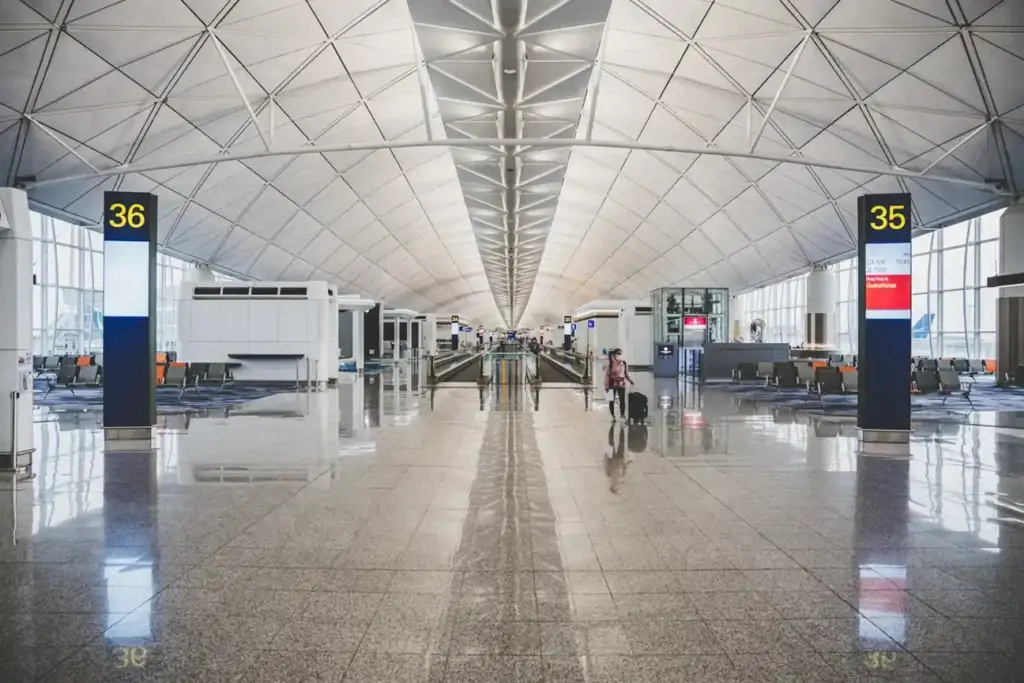
A sign is useful when it appears before a choice must be made. Test the sequence at walking pace and from different approaches, including the route from a lift.
A person should not have to commit to a corridor before learning whether it is the correct one. Keep the most urgent information visually distinct from advertising, decoration and notices intended for a different stage of the visit.
Design for a tired first-time visitor
A familiar route can seem straightforward to somebody who works there. Review it with people who do not know its conventions.
Consider language, readable type, sightlines and the physical effort of moving between levels. People should be able to ask for help without feeling that they have failed to understand the building. Staff questions are a useful record of where the route still asks too much of a visitor.
Keep the system accurate as the building changes
Temporary works and relocated services can undermine a dependable sign system. Give changes an owner and remove information that no longer applies.
A temporary route needs the same care as a permanent one, especially where passengers make a connection. The strongest wayfinding is a maintained service: architecture, information and assistance agreeing on what the traveller should do next.