On this page
Understand the building before the planting
A roof is part of a building before it is a landscape. Any proposal needs an appropriate assessment of structure, waterproofing, drainage, safe access and local requirements by qualified professionals.
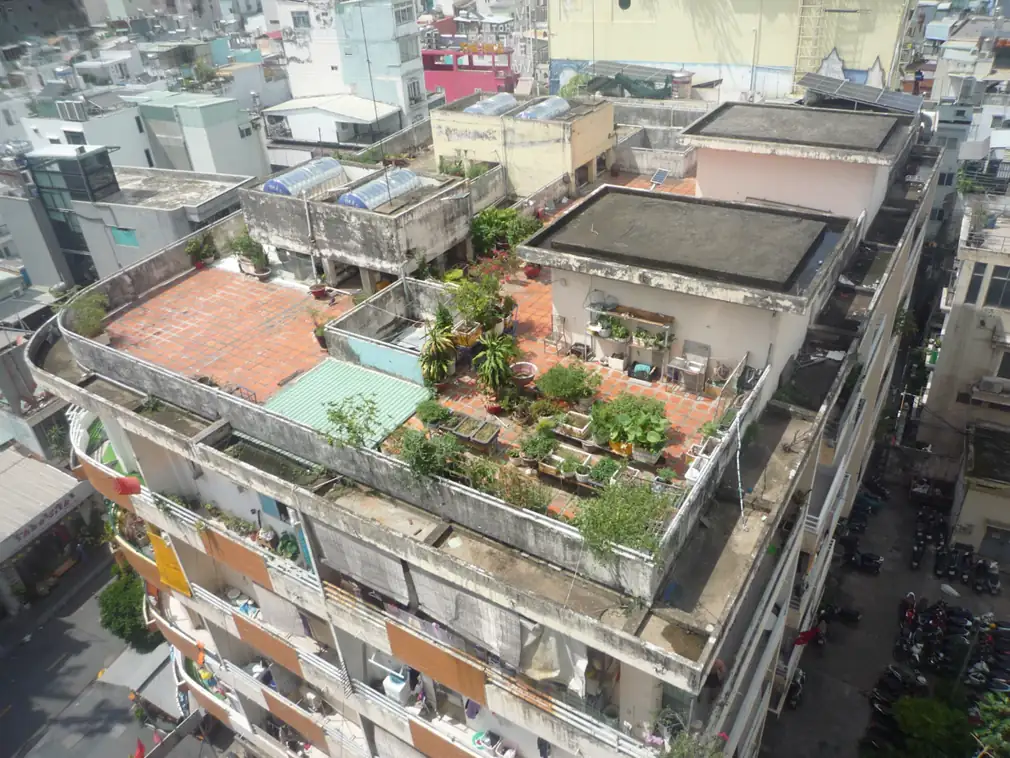
A photograph of a flourishing rooftop elsewhere does not establish what another roof can support. Early clarity about the building's limits prevents the planting plan from making promises the site cannot keep.
Give water and access an operating plan
Watering, drainage checks and the movement of materials all need practical routes. Consider who can reach the space, where equipment belongs and how work will happen when a regular volunteer is away.
These questions are easier to solve before containers and furniture arrive. The garden also has neighbours below and beside it, so its care should fit the operation of the wider building.
Choose a scale people can maintain
A manageable area cared for consistently can be more useful than an ambitious layout with no dependable owner. Decide which activities matter: growing a small range of plants, offering a shared place to sit or creating an educational project.
Plant selection needs local expertise about exposure and conditions. The visual plan should follow that purpose and the care that can realistically be provided.
Treat the first season as a learning period
Record what the first season reveals about wind, shade, access and maintenance time. Adjust the next stage in response rather than assuming the original drawing must be defended.
A rooftop garden is an ongoing responsibility shared between the building and its users. The plants become convincing when the arrangements beneath the surface are as thoughtful as the view.
Make responsibility visible to everyone using the space
A shared roof needs a clear point of contact and understandable boundaries. Explain which activities are available, which require an organiser and how a maintenance concern should be reported.
The arrangement should still make sense to a new resident who did not attend the first planning meeting. Keep records where the people responsible for the building can find them. Good shared spaces depend on continuity: the garden should remain cared for when an enthusiastic founder moves away or changes their routine.
Questions to take forward
- Assess the roof and access with qualified expertise.
- Assign ongoing care before expanding the plan.
- Use the first season to learn about actual conditions.