On this page
Look beyond the finished display
A market is easiest to photograph when the counter is full, but its working day begins earlier. Receiving, checking and arranging produce all shape the offer.
Follow how information about availability reaches the people serving customers. A dependable market depends on those less visible handovers as well as the abundance of the display.
Let the arrangement help a decision
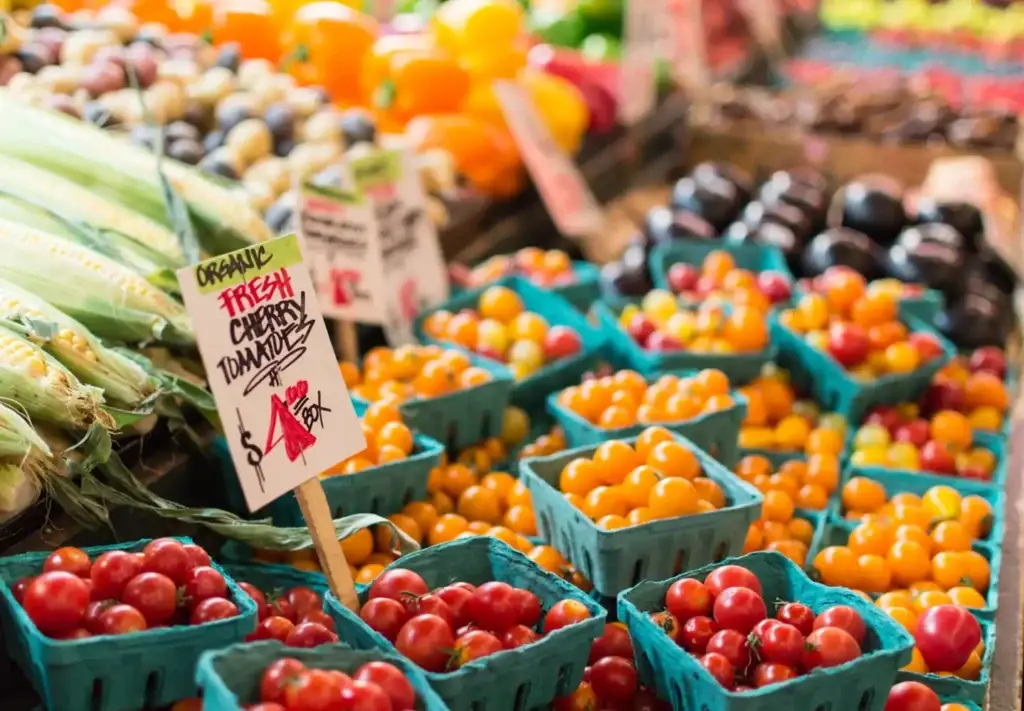
A clear display makes prices, quantities and product descriptions easy to understand.
Keep practical information near the item rather than expecting every visitor to ask the same question. A thoughtful arrangement can make an unfamiliar ingredient less intimidating, while still leaving staff room to explain a detail that does not fit on a label.
Give supply a human scale
Ask specific questions about what is being sold and how it reached the counter.
A vendor’s knowledge can help connect an ingredient with its season and handling, but broad claims need appropriate evidence. Avoid treating the appearance of a wooden crate as proof of a particular production method or origin.
Learn from the end of the day
The work of a market includes what remains unsold and the way the space is reset. Record recurring mismatches between the range and demand.
Clear routines can help the next day begin with better information. The city’s food supply becomes more understandable when the story includes the close of trade as well as the morning’s full shelves.