On this page
The daily rhythm is part of the offer
A bakery has a particular relationship with time. Dough preparation, proving, baking and selling all have to meet the rhythm of the surrounding streets.
The customer sees the counter, but the offer begins much earlier. A shop near a station may serve a different morning from one beside a school or a residential square. Understanding those routes is as important as deciding which items belong on the shelves.
A short range can have a clear point of view
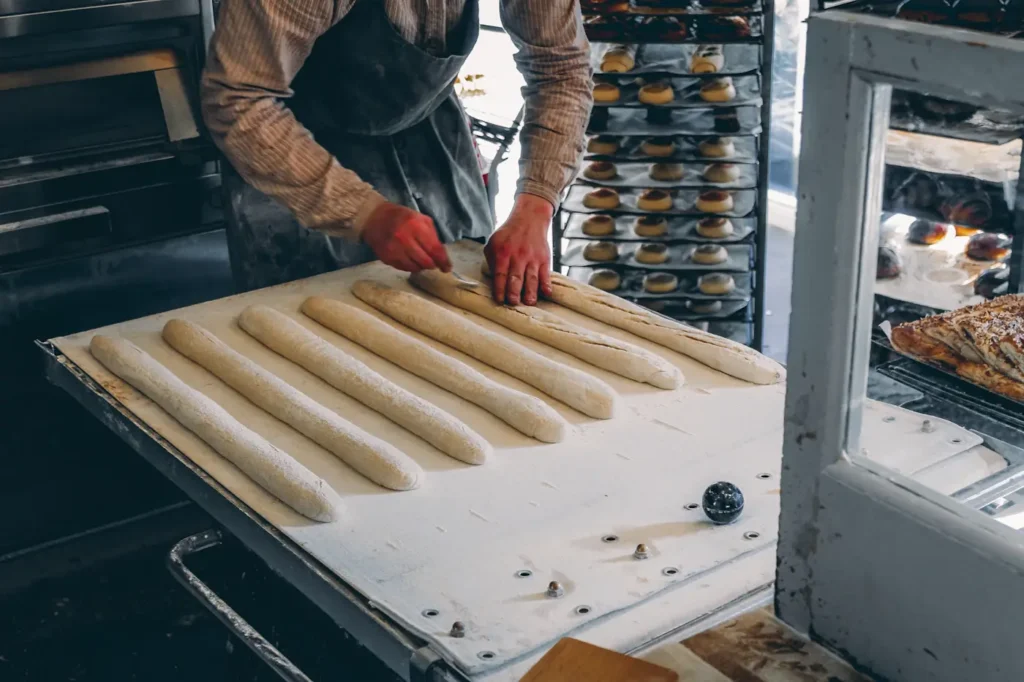
A recognisable range does not need to be enormous. A dependable everyday loaf, a few carefully chosen pastries and a seasonal variation can tell a clearer story than a counter that promises everything.
Explain unfamiliar ingredients and describe texture or flavour in plain language. The aim is to help a customer make a choice they can understand, rather than treating specialist baking vocabulary as proof of quality.
Make the ordinary visit easy
Look at the visit from the pavement to the door. Are opening hours readable, is the queue understandable, and can a person carrying bags see what is available? A first-time customer may need a little longer to choose.
Separate that moment from the pressure of paying when space allows. Small practical decisions can make a busy counter feel welcoming without slowing every transaction.
Consistency is a form of hospitality
Repeat visits depend on more than a successful first purchase. People learn when their preferred loaf appears and what happens if it has sold out.
Clear information is more useful than a vague promise of constant availability. A bakery can also learn from the items left at closing and the requests it cannot meet. The strongest neighbourhood ritual is a relationship between craft, dependable information and the ordinary shape of the day.
The window is an editorial space
The shop window can explain the day before anyone joins the queue. Show the range in a way that is readable from outside, and keep the information current when a line sells out.
A small note about the next bake is more useful than an empty display with no explanation. Consider the customer who has only a few minutes and the visitor who wants to browse. Both should be able to understand the invitation without blocking the route of the other.
Questions to take forward
- Fit the counter to the rhythm of the neighbourhood.
- Explain a focused range clearly.
- Make repeat visits dependable and easy.