Demo story. Sample content for the Pressline theme demonstration.
On this page
Write what you notice before what you think of it
A notebook can hold the details that disappear when an experience becomes a summary. Record a phrase on a sign, the arrangement of a shop window or the sequence of steps in a frustrating task.
Start with the concrete detail. Interpretation can follow later, when there is enough material to distinguish a recurring pattern from a passing impression.
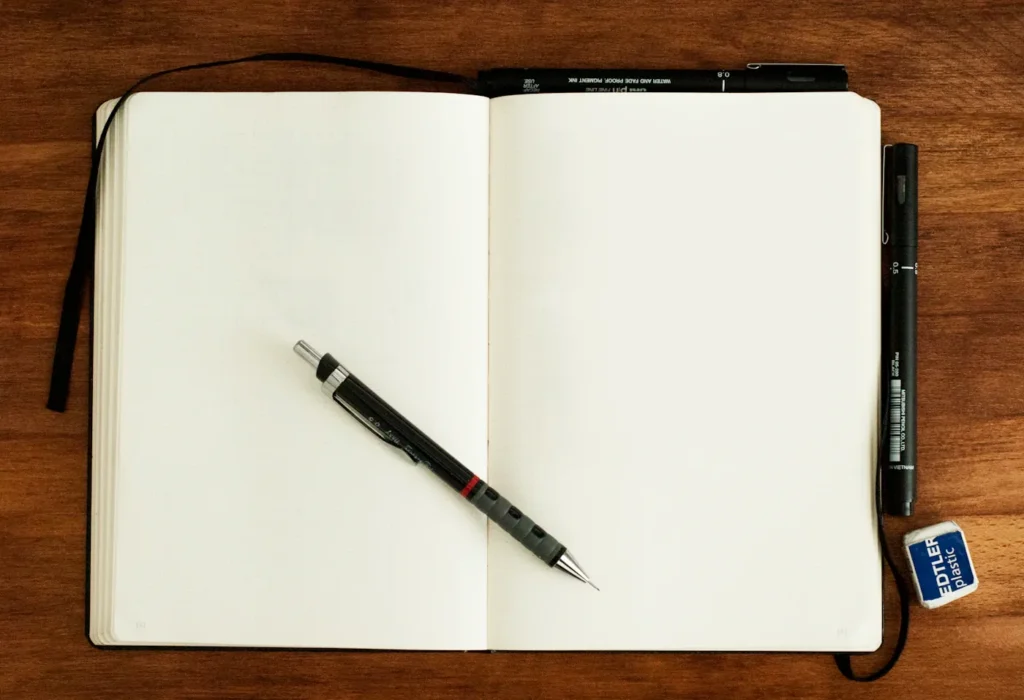
Use a structure that leaves room for surprise
Dates and a few simple headings make notes easier to revisit. Leave room for a sketch, a question or a detail that does not yet belong anywhere.
Elaborate systems can become an obstacle if every observation needs to be classified before it is written down. Choose a format that can be used while standing, travelling or waiting, rather than only at a carefully arranged desk.
Return to the page after some distance
The value of a notebook often appears on a second reading. A question from last month may connect with an object noticed yesterday.
Mark what still interests you and let other notes remain unfinished. The notebook is useful as a working record, not a polished archive. Its purpose is to make attention available again when memory has already moved on.