On this page
Follow the route from door to destination
A route should be understood as a journey rather than a line on a map.
Where does a rider join, what happens at a major junction and how does the final approach work? Observe the transitions as well as the continuous sections. A gap that looks small in a network diagram may be the part that determines whether someone is willing to make the trip.
Make the shared moments understandable
Places where cycling routes meet walking routes, bus stops or loading activity need particular care. People should be able to understand the arrangement without negotiating it anew on every visit.
Appropriate design requires local assessment and the involvement of different users. Clear information supports that work, but a complicated encounter should not depend only on a sign explaining who ought to move first.
Consider what happens when the bicycle stops
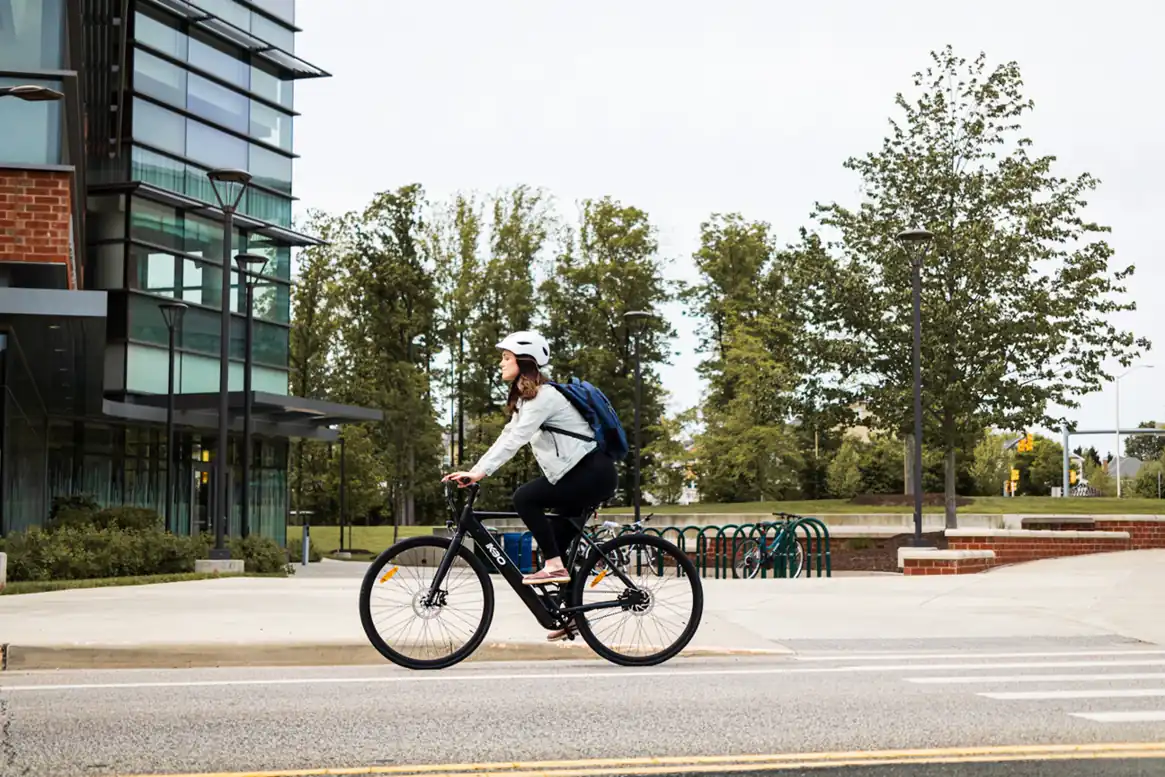
The destination includes the place to leave a bicycle and the transition to walking. Parking should fit the likely visit and leave surrounding routes usable.
A person may be carrying shopping, travelling with a child or arriving on a different kind of cycle. These ordinary situations help explain why the final few metres deserve a place in the brief rather than being left to chance.
Review the route through repeated use
Conditions change with weather, road works and surrounding activity. Establish how obstructions or damaged surfaces are reported and addressed.
Speak with people who use the route and those who would like to but do not yet feel able to. A connected cycling network grows through attention to those practical barriers, not only through the length of newly marked sections.