On this page
The material helps set the pace
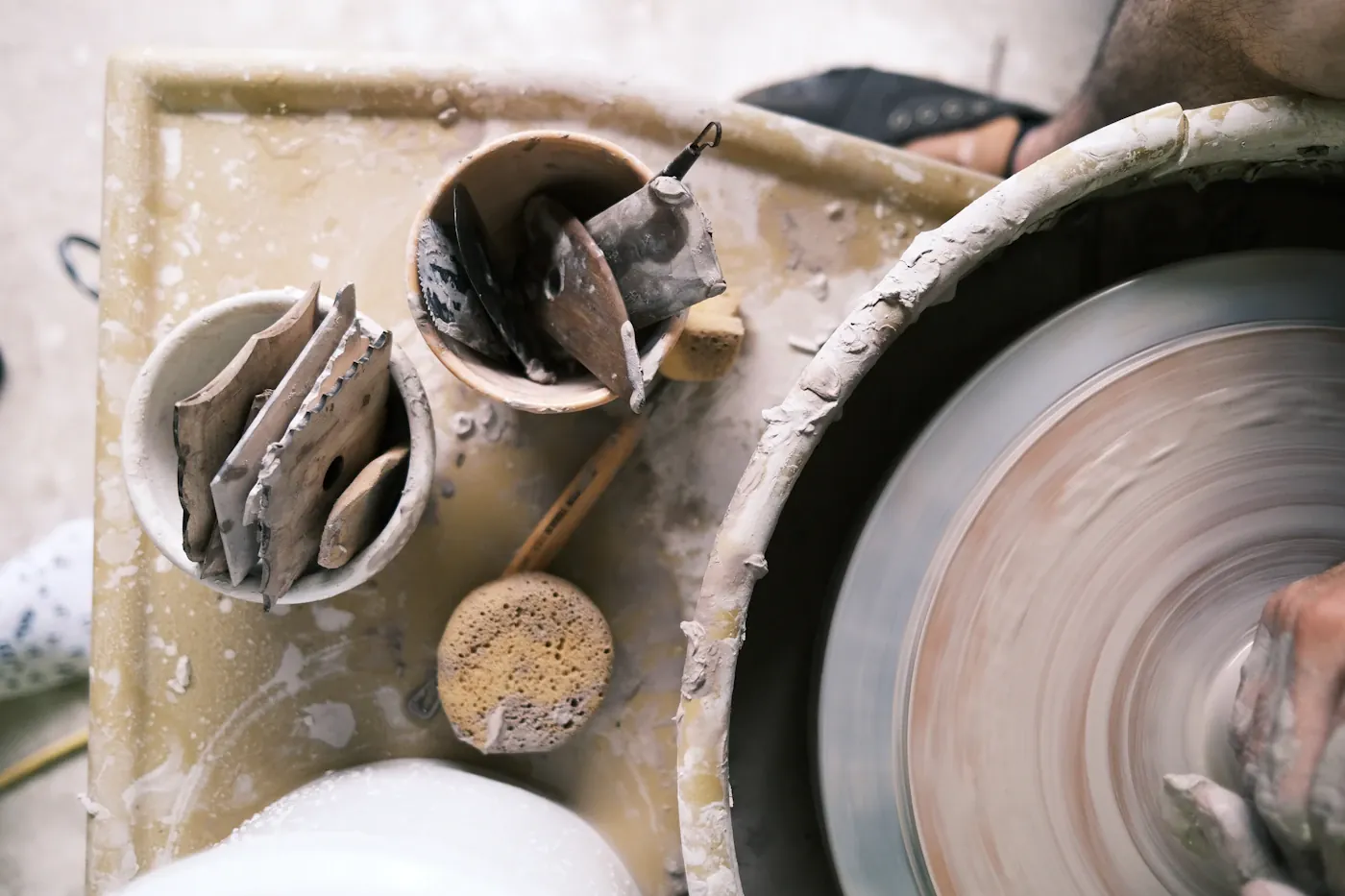
A ceramic object passes through several different states before it becomes part of daily life. A maker shapes it while the material is workable, returns to it for finishing and relies on appropriate drying and firing processes.
The sequence creates natural moments for reconsideration. It is a useful reminder that a process can have more than one pace, and that waiting sometimes belongs to the work itself.
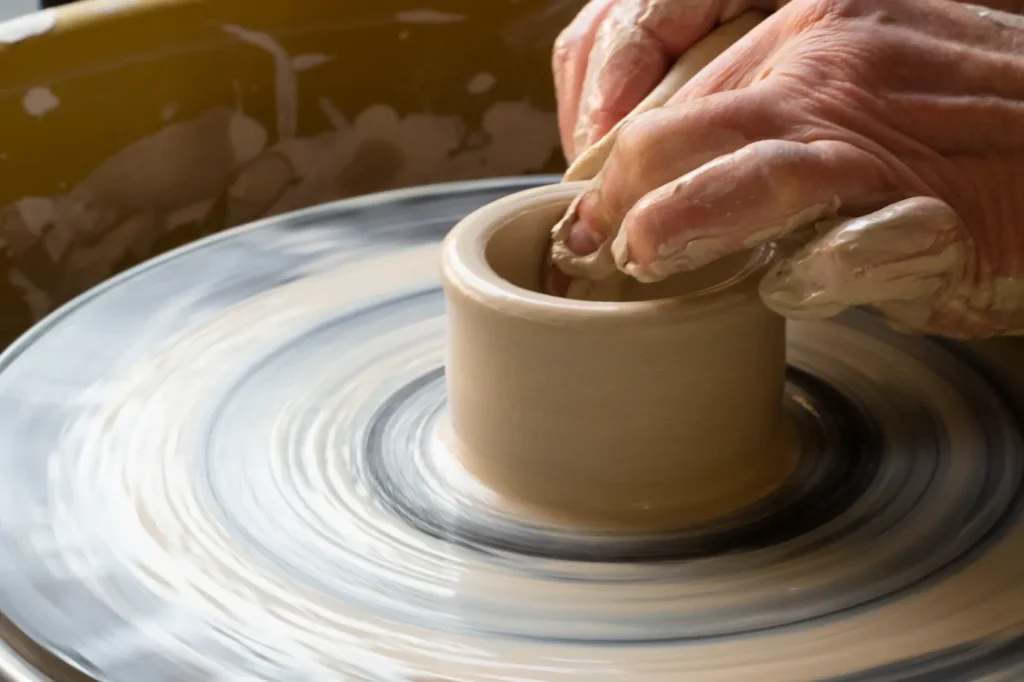
A useful form is tested by a hand
A cup is more than a profile photographed on a shelf. The rim meets a lip, the handle meets a hand and the base meets a table.
These relationships give a maker concrete questions to test. How does the object feel in use, what is difficult to clean, and which detail exists only because it looked convincing in an early sketch?
Keep the evidence of making
A studio accumulates small records of decisions: test pieces, glaze samples, sketches and objects that did not work as intended. Kept thoughtfully, they become a resource for the next piece.
Record materials and processes accurately rather than assuming an attractive result can be repeated from memory. Specialist studio procedures, including kiln operation and material handling, belong within an appropriately managed working environment.
Let fewer decisions become better decisions
The broader lesson is not that every object should be handmade. It is that making improves when attention is given to materials, use and the order of decisions.
A limited range can leave more room to understand each form. The most persuasive object is often one whose ordinary use makes its care and judgement apparent without an explanation.
The finished object can reopen the brief
Use a finished piece for a while before deciding that its design is settled. A comfortable-looking handle may feel different when the cup is full, and a surface that photographs well may be difficult to keep clean.
Record the observation without rushing to defend the original choice. The next version can address a specific problem instead of changing details simply to appear new. Repetition becomes a form of inquiry when each attempt carries forward something learned from the previous one.
Questions to take forward
- Let the process inform the sequence of decisions.
- Test an object through ordinary use.
- Record experiments so that learning can be reused.